A study in materials.
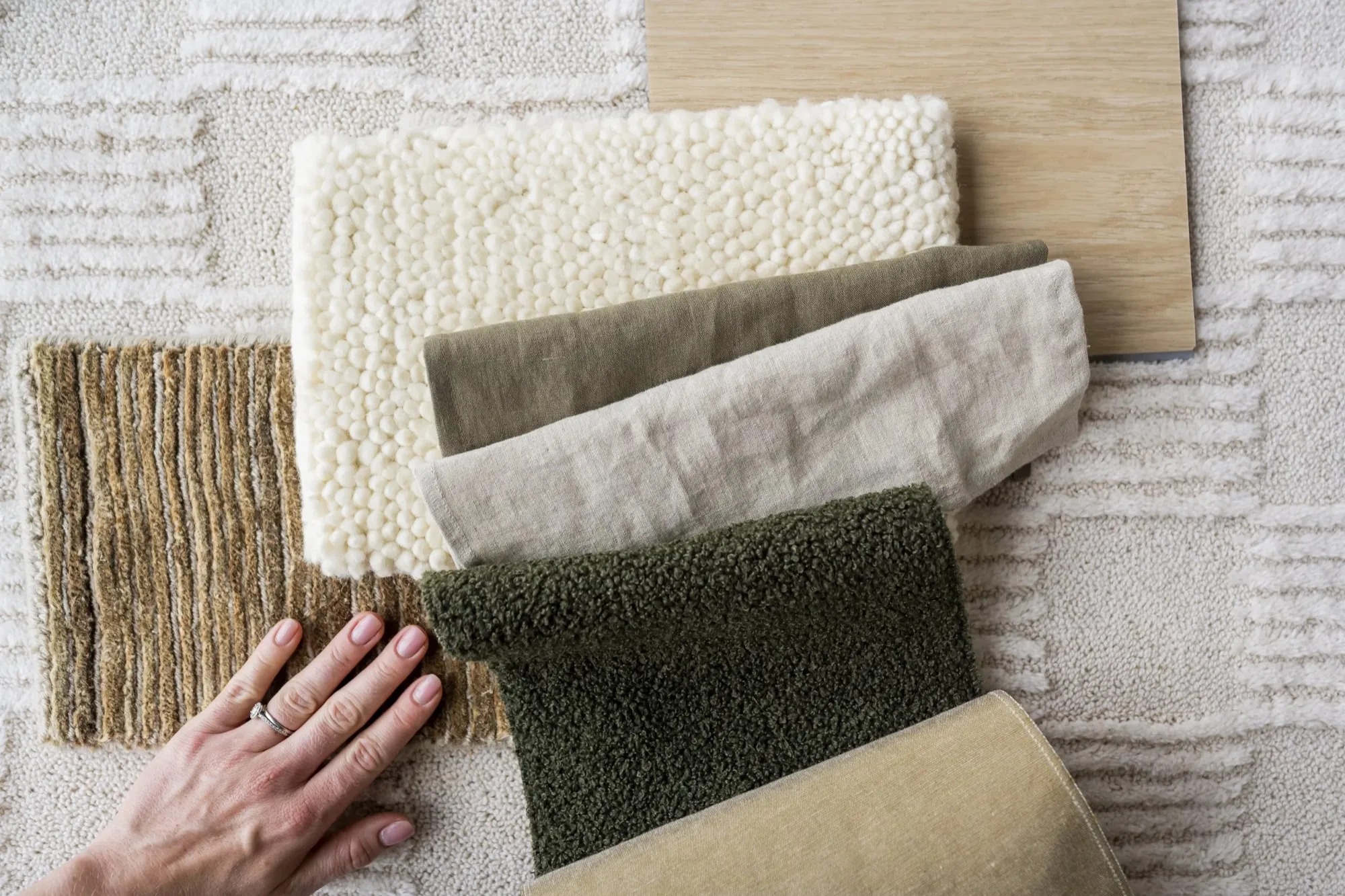
Inside the Ligne Pure atelier, where wool, linen and silk samples are layered, compared and lived with before a single rug is woven.
- Location
- Ligne Pure atelier, Belgium
- In this home
- Wool · Linen · Silk samples
Where every rug begins.
Before a design reaches the loom, it exists as a stack of samples on the atelier table. Fibres are set side by side in daylight to see how they take colour and how they age.
The library grows with every project: offcuts, dye trials and finished swatches that remind the team what a texture feels like underfoot, not just how it looks.
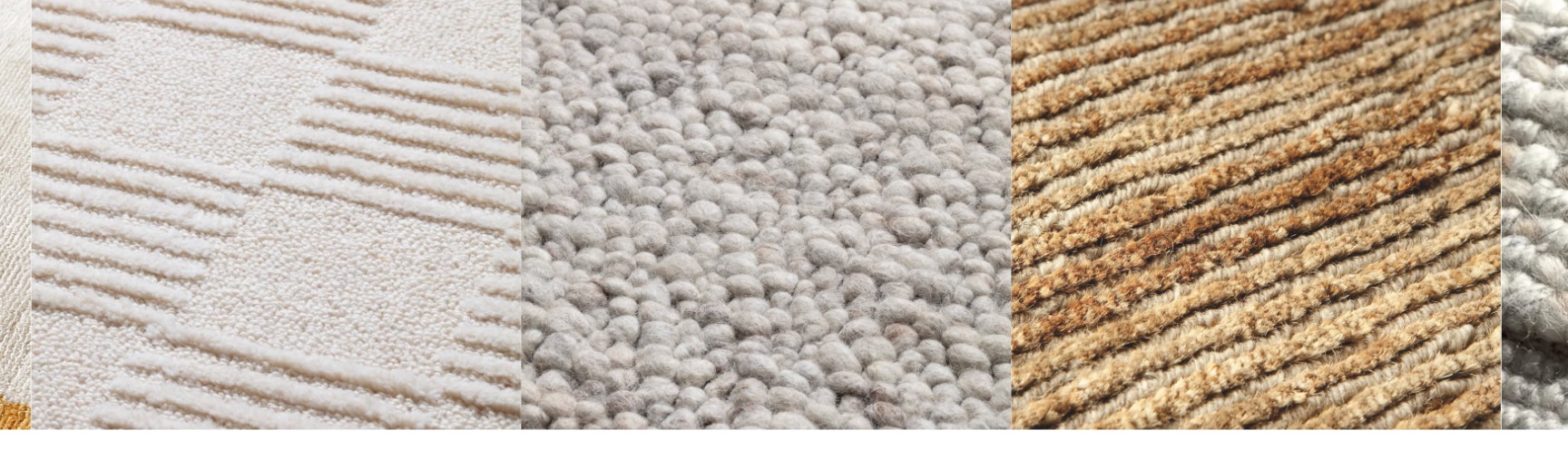 Layers of wool and linenMaterial library · Detail
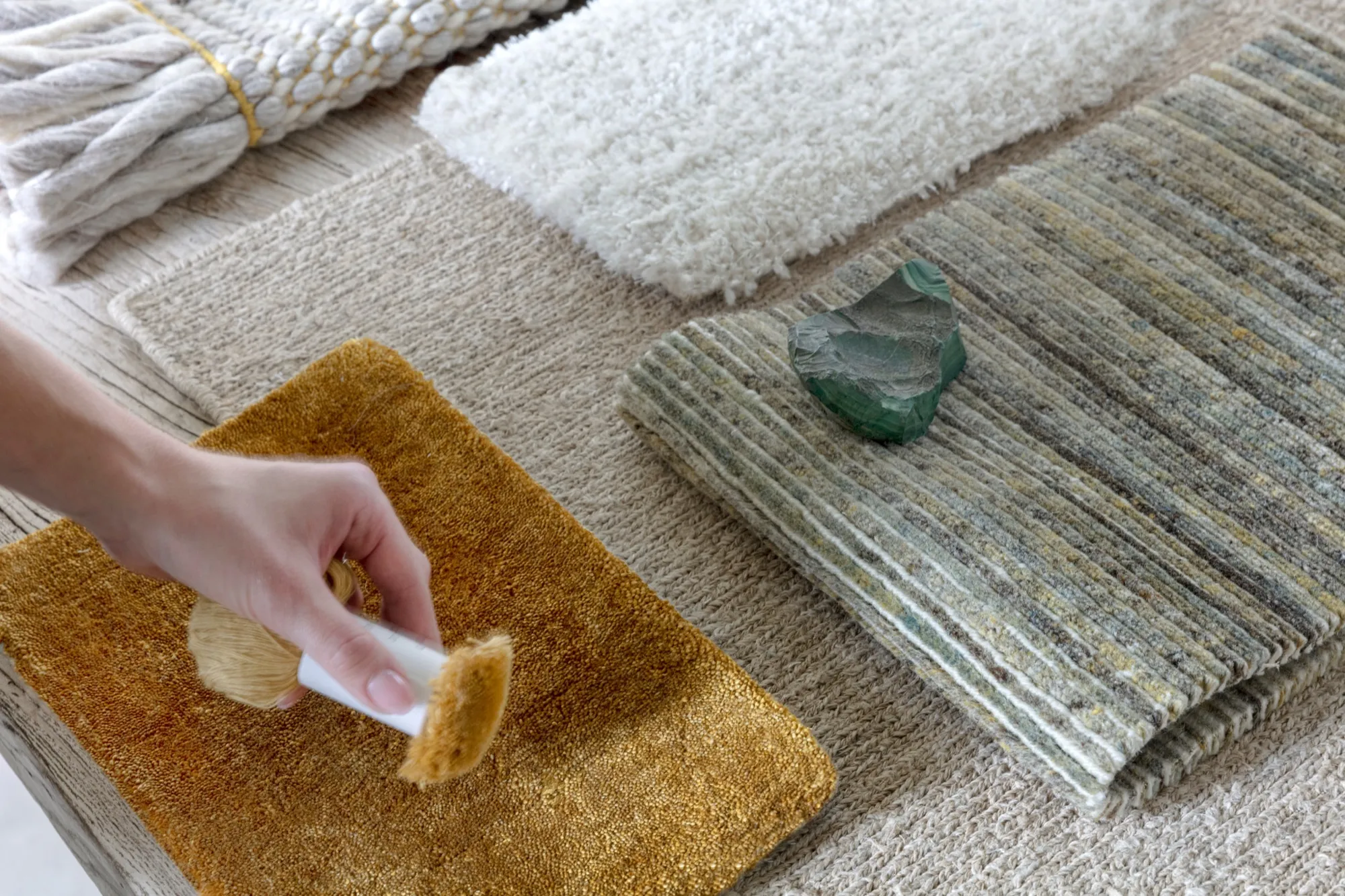 Colour trials in daylightAtelier · Dye samples
The making of a rug
Every handmade rug follows a considered process, shaped by material knowledge, craftsmanship and time.
In five stages, carefully selected fibres are transformed into a finished rug with its own texture, character and presence. Thoughtful making takes time. Each stage contributes to the quality, balance and individuality of the final piece.
01
It starts in the pasture.
The process begins with the careful selection of materials. Fibre quality, natural tone and texture all influence the character of the finished rug. The fibres are then prepared, spun into yarns and developed for the weaving process.
“A rug’s character is shaped by material and craftsmanship.”
02
The loom sets the rhythm.
Creating a rug is a measured process, guided by the design, the material and the technique. Row by row, the weaver brings colour, texture and proportion together, with close attention to the character of each piece.
Once the weaving is complete, the rug moves through a careful finishing process. It is cleaned, refined and inspected before being prepared for its final destination. Subtle variations are part of its handmade nature, giving every rug an individual presence.
“Choosing a material is choosing how a room will feel for years.”