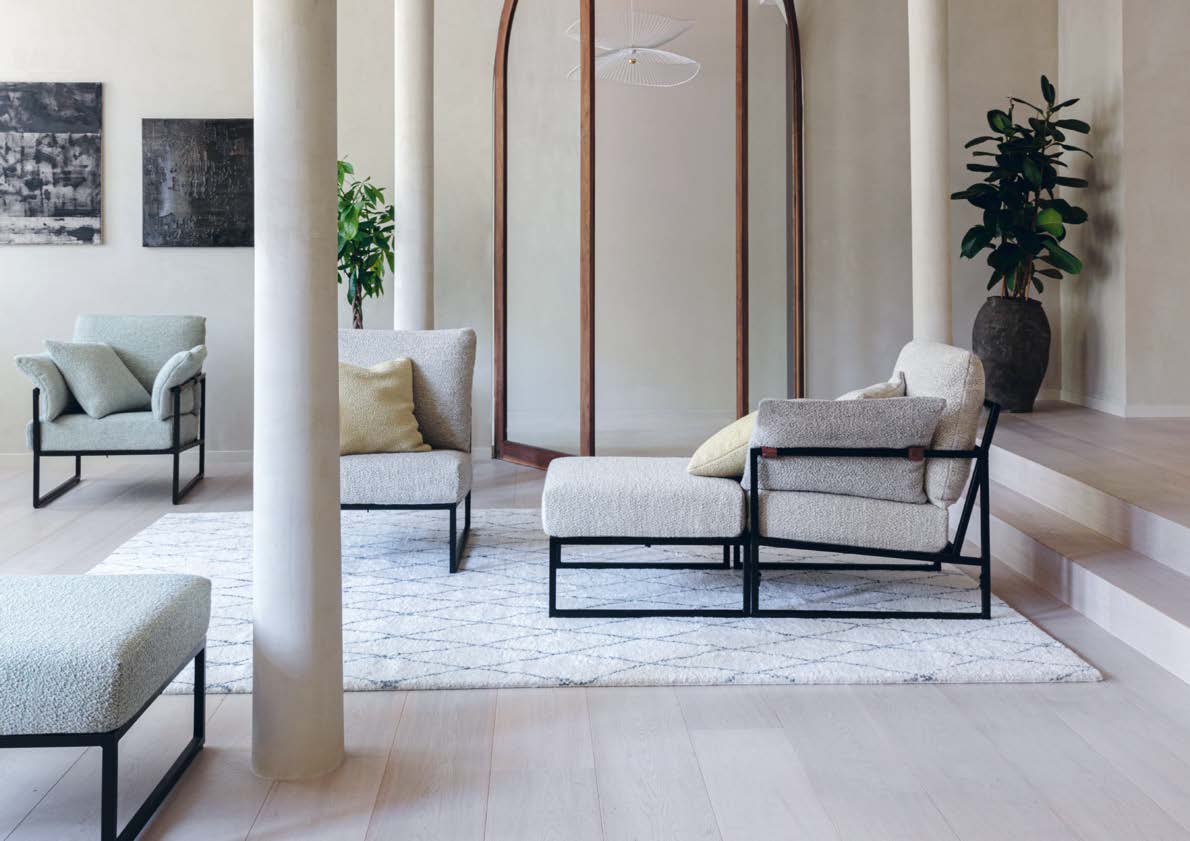
By the water, Rotterdam.
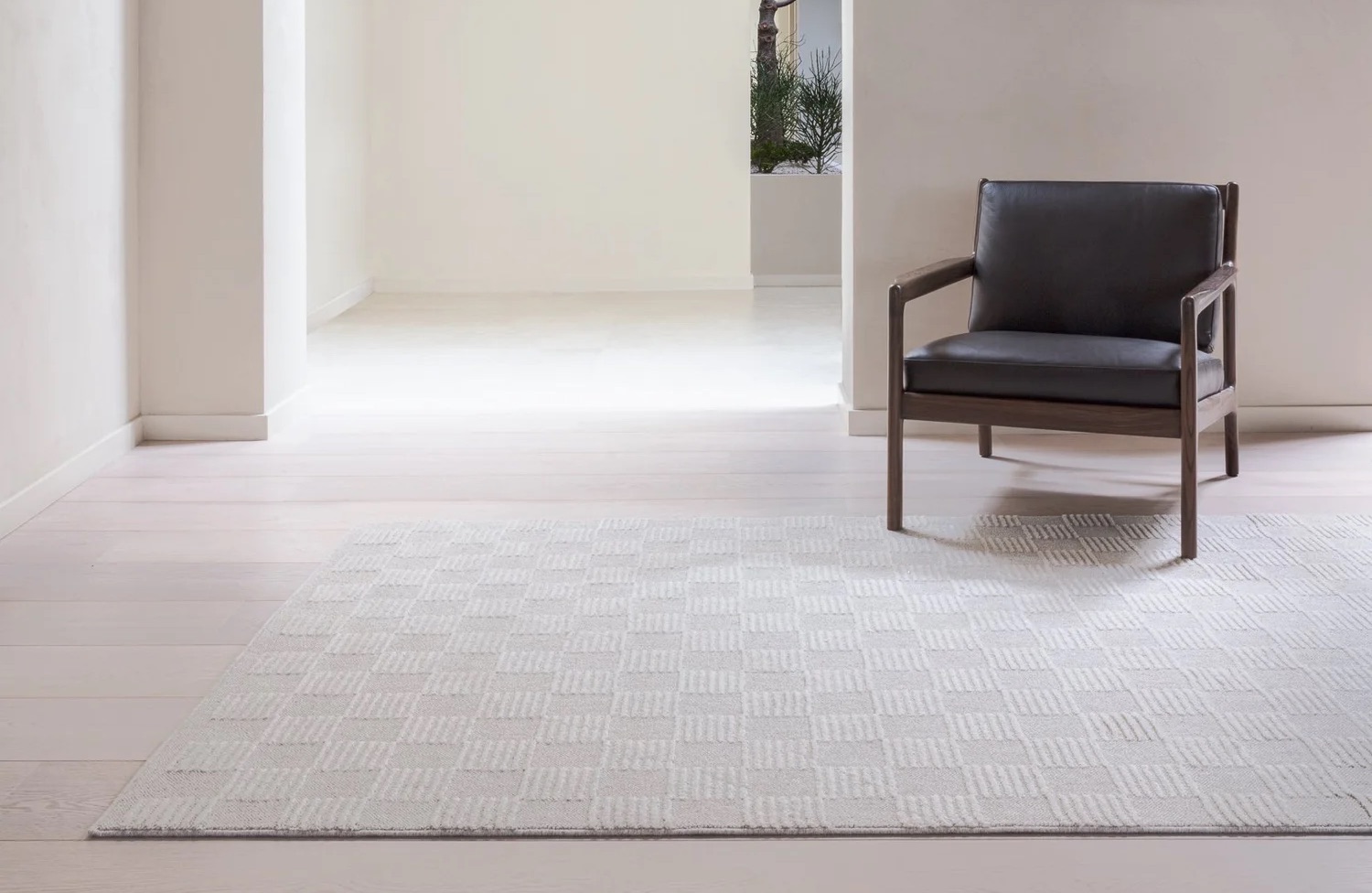
A bespoke checkerboard rug woven to the exact proportions of a waterside apartment, where hallway and living room share a single pale floor.
- Location
- Rotterdam
- In this home
- Bespoke rug · Rug Ash
Woven to the plan.
The apartment is one long sequence of arched openings, and a standard size would have cut the flow. We drew the rug on the floor plan first, then wove it to those measurements.
The soft checkerboard in two tones of undyed wool echoes the light off the water outside, giving the space rhythm without pattern for its own sake.
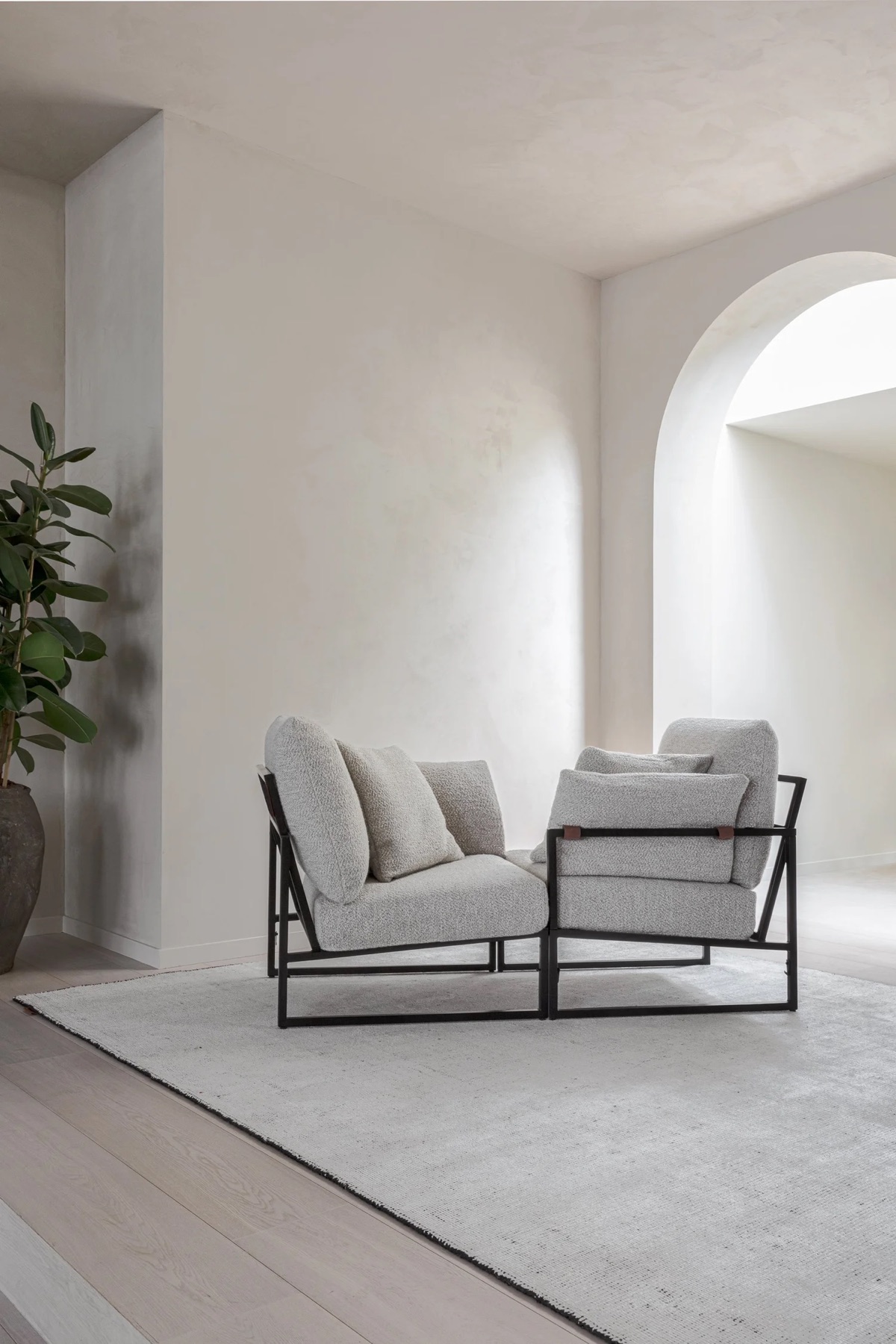 One rug from hall to windowBespoke rug · Living room
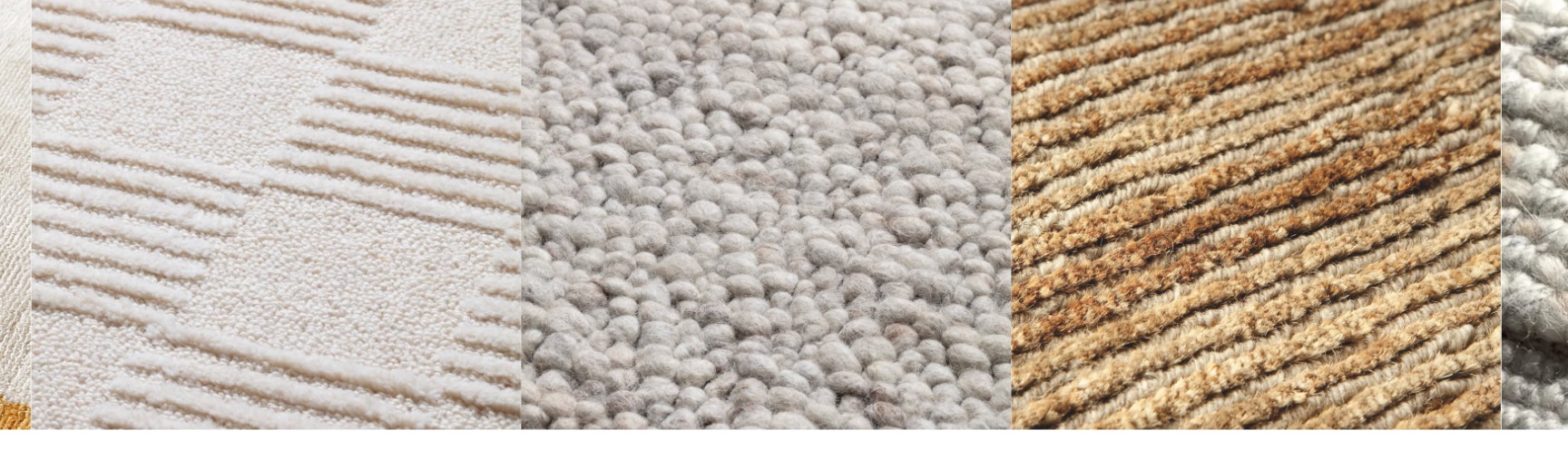 Two tones of undyed woolBespoke rug · Detail
The making of a rug
Every handmade rug follows a considered process, shaped by material knowledge, craftsmanship and time.
In five stages, carefully selected fibres are transformed into a finished rug with its own texture, character and presence. Thoughtful making takes time. Each stage contributes to the quality, balance and individuality of the final piece.
01
It starts in the pasture.
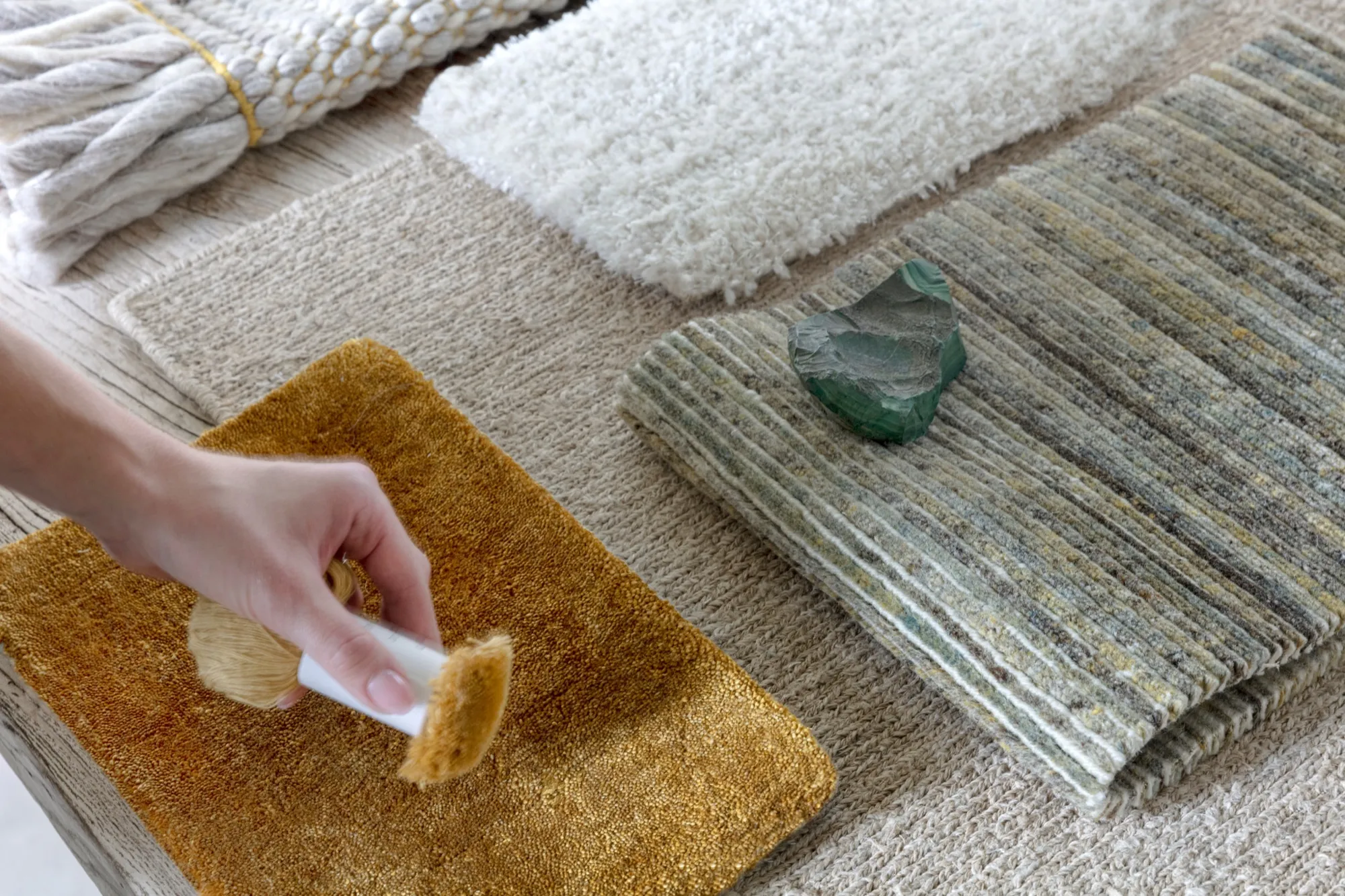
The process begins with the careful selection of materials. Fibre quality, natural tone and texture all influence the character of the finished rug. The fibres are then prepared, spun into yarns and developed for the weaving process.
“A rug’s character is shaped by material and craftsmanship.”
02
The loom sets the rhythm.
Creating a rug is a measured process, guided by the design, the material and the technique. Row by row, the weaver brings colour, texture and proportion together, with close attention to the character of each piece.
Once the weaving is complete, the rug moves through a careful finishing process. It is cleaned, refined and inspected before being prepared for its final destination. Subtle variations are part of its handmade nature, giving every rug an individual presence.
“It looks as if the floor was always meant to be this way.”